Doom Mandala · Guides
Trouble and the two records that bore their name
Trouble used their own name for two records, six years apart. One came out on Metal Blade and is known as Psalm 9. The other came out on Def American. Play the two beside The Skull and you get a small history of American doom, written by the same band across two labels.
Published ·
The Chicago band and its influences
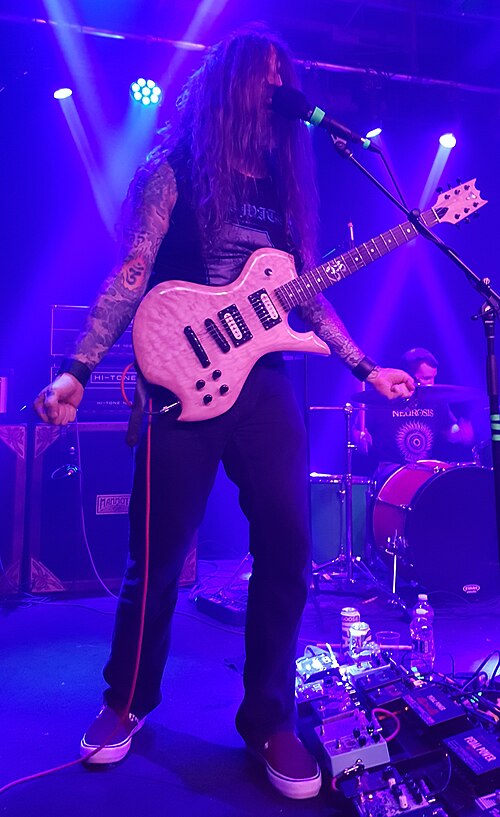
In 1978 Rick Wartell was still in high school when he formed Trouble and played the band’s first show in Chicago. An advertisement in 1981 brought guitarist Bruce Franklin and singer Eric Wagner into the group. A concert tape did the work of a calling card. Fans traded a recording from the Deaf Club in Aurora in 1983, and it reached Brian Slagel of Metal Blade. Before Trouble became the name on an LP sleeve, people were passing their music from hand to hand.
1984 · Psalm 9 — The Tempter
Look up the first LP in Trouble’s own discography and the entry starts with the name of the band. Psalm 9, the name collectors use, appears beside it. Metal Blade issued the record in 1984. Start with The Tempter, then put it aside until you have heard At the End of My Daze. The pleasure of comparing the two is that the sleeves give you the same artist and nearly the same title, while the two performances give you a way to recognise each album for yourself.
1985 · The Skull — The Skull
The Skull followed on Metal Blade in 1985. According to the musicians, many of its songs were written alongside the material for Psalm 9. They remember a more melancholy record nonetheless. That makes its title song a particularly good companion to The Tempter. A quick look at the release dates suggests the band learned a different way of writing between albums. Put the two songs together knowing that the writing periods overlapped, and another possibility opens up. Choosing which songs belong together helps shape the character of a doom record.
1990 · Trouble — At the End of My Daze
Run to the Light appeared in 1987. By the time Trouble surfaced on Def American in 1990, a whole album stood between it and The Skull. Rick Rubin produced the self-titled record, and Eric Wagner is the singer you hear on it. Play At the End of My Daze first. Hammerheart singles it out as the opener and draws attention to its mid-tempo riff. Listen to what that riff leaves for Wagner to do, then take the same question back to The Tempter.
Two self-titled sleeves, two moments in doom
A later Hammerheart edition pairs the studio album with a live disc recorded in Dallas. For a first visit we would keep that concert for last. First compare The Tempter with At the End of My Daze, then put The Skull between them. The extra stop changes the comparison. A jump from one self-titled sleeve to the other can make the change of record label look like the whole story. The intervening music gives the musicians themselves a much larger part in it.
Why is the early Trouble album called Psalm 9?
The group files its 1984 Metal Blade album under Trouble and gives Psalm 9 as its familiar alternative name. It is a handy distinction when looking for the self-titled Def American release from 1990.
What comes between The Skull and Trouble?
Run to the Light came out on Metal Blade in 1987, after The Skull in 1985 and before the Def American album in 1990. It is the missing studio LP between the two selections.